Pressure Washing Stucco, Pavers, and Pool Decks: The Right Pressure for Each
The same machine that cleans a driveway in minutes can chew up your stucco, so the surface decides the method.
October 17, 2026 · 3 min read
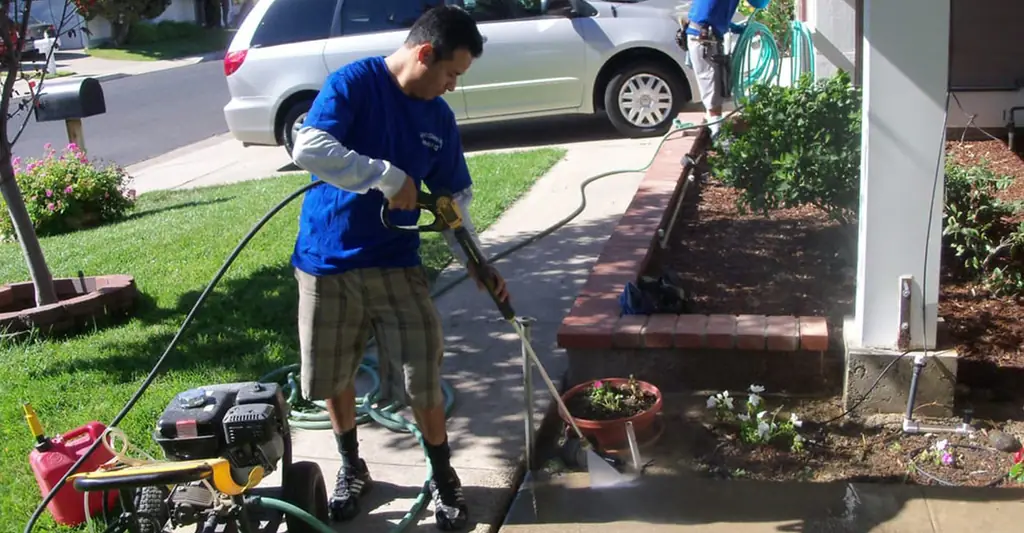
A pressure washer is a blunt tool that works because it's adjustable. The same machine can strip a stain from a driveway or leave a permanent scar in a stucco wall, and the difference comes down to pressure, tip, and distance. Most damage from DIY washing happens when someone uses a driveway setting on a wall.
Concrete takes the most, stucco takes the least
Concrete driveways, sidewalks, and walkways are dense and tough, so they handle the strongest settings. That's where a gas pressure washer earns its keep, lifting oil-free grime, tire marks, and the gray film that builds up over years. Even then, a steady, overlapping pass looks better than one aggressive blast, which leaves pale stripes.
Stucco is the opposite. It's a cement-based coating, and its surface is porous and fairly soft compared with a slab. Too much pressure, or a tip held too close, can gouge the finish and drive water into places that were never meant to get wet. Stucco calls for lower pressure, a wider spray, and more patience. Too much pressure on stucco or wood does real damage, which is why the right PSI for each surface is part of the job at Alan's Cleaning.
Distance matters as much as pressure. The same tip that's gentle from three feet turns aggressive from six inches, so the technician's habits count for more than the dial on the machine. A steady hand and a consistent, overlapping pass keep a wall from looking striped when it dries.
Pavers and the sand between them
Brick pavers sit in a bed of sand, and the joints between them are filled with more sand. Blast those joints at close range and you'll empty them, which lets pavers shift and weeds move in. A moderate setting with a good distance cleans the face of the brick without stripping the joints.
Wood fences need a gentle touch for a different reason: the fibers raise and splinter under a hard stream. Washing along the grain at modest pressure removes the gray and green without fuzzing the board.
Shade algae and sprinkler crust
Walk the north side of any house and you'll find it. Shaded concrete, the base of a wall, and the damp corner by a downspout grow a green or black film of algae. It starts as a stain, but it's alive, and it makes the surface slick. Pressure alone can remove the top layer, though the right cleaning solution is what keeps it from returning quickly.
Alan's Cleaning uses eco-friendly cleaning solutions that are safe around children and pets and meet HOA standards, which matters when the spot in question is a play area or a shared path.
Sprinkler overspray leaves a white, chalky crust on the lower part of a wall or along a walkway. It's the same mineral residue that spots windows, only on a bigger and rougher surface. A rough surface holds onto it, which is why you can scrub the same stucco corner twice and still see the line. Matching the pressure to the surface, then fixing the sprinkler angle afterward, keeps it from coming back.
Pool decks: sunscreen and calcium
Pool decks collect two things that driveways don't. Sunscreen and body oil soak into the surface where people stand and lie, leaving a darkened, greasy-looking patch. And water splashed out of the pool dries and leaves calcium buildup, a hard white crust along the edge and around the skimmer lids.
Both are stubborn, and both sit on a surface that people walk across barefoot. Whatever loosens has to be rinsed away completely, not left to dry back down, especially around the drains and the pool edge. That makes the choice of cleaning solution as important as the pressure. Pool decks also tend to be textured for traction, so the wash needs to clean the texture without wearing it smooth.
Questions worth asking a washer before you book
- How do you set the pressure for stucco compared with a driveway?
- What do you use on algae, and is it safe for kids and pets?
- Will the pavers' joints stay filled afterward?
- Are you insured if something goes wrong?
On the last one, Alan's Cleaning is California licensed and bonded, carries $2 million in liability insurance on every job, and will show proof on request. The technicians are employees Alan has background-checked, not a rotating set of subcontractors.
If you've got a driveway, a patio, and a stucco wall that all need attention, call or text Alan at 949-457-1227. One flat-rate phone quote covers it, and the work is usually on the calendar within the week.
Alan's Cleaning & Power Washing LLC, 949-457-1227
Call 949-457-1227More articles
Why Your Windows Spot Up After the Sprinklers Run
Those white dots on your lower windows aren't dirt, and wiping them harder usually makes things worse.
Solar Panel Cleaning in Orange County: Why Soft Brushes Beat Pressure Washers
Your panels spend months in the sun collecting grime, and the wrong cleaning method can cost you more than the dirt does.