Get Your Gutters Cleaned Before the Rains Come
A gutter that looks fine from the driveway can be packed solid, and the first real storm is a bad time to find out.
October 17, 2026 · 3 min read
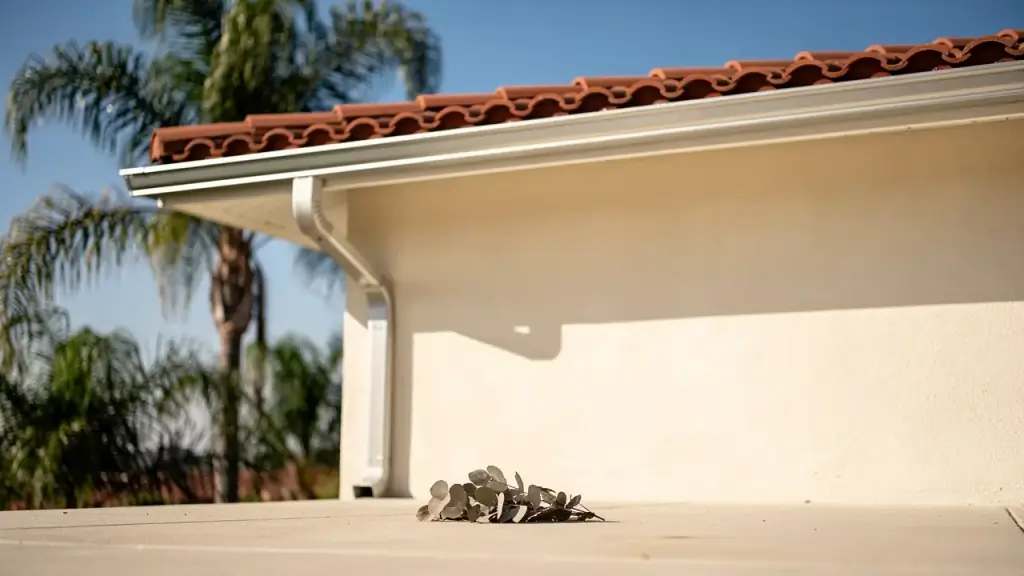
Most of our rain in South Orange County falls between November and March. For the other seven or eight months, gutters sit up there collecting whatever the wind and the trees drop into them. Then the first real storm arrives, and the water has to go somewhere. If the gutter is full, that somewhere is over the edge.
What fills a gutter here
Eucalyptus is the usual suspect. It sheds long, leathery leaves, curls of bark, and small seed pods all year, and the leaves mat together into a dense layer that holds moisture. Sycamores and oaks drop leaves in their season, and the trees in older Mission Viejo neighborhoods are large enough to hang over a whole roofline.
Then there's what the Santa Ana winds deliver in the fall: dry debris, twigs, and fine grit that sifts down into the trough. If you have a tile or composition roof, the surface sheds its own fine grit over time as well. All of it settles into the same low spot, and when a little rain hits, it packs into a heavy sediment that doesn't blow out on its own.
The clog is rarely spread evenly. Roof valleys funnel debris toward certain stretches of gutter, so you'll often find one corner packed solid while the rest looks passable. Low sections over the porch or garage collect the most, since branches hang closest there, and they're the part of the roofline that homeowners notice last.
What a clogged gutter does when it rains
Water that can't flow through the gutter spills over the lip, usually in a sheet along the front or in a stream at an inside corner. That water lands against the foundation, soaks the planting beds below, and runs down the fascia and siding. Repeated overflow can leave stains, rot soft wood trim, and wash soil out from your landscaping.
The weight is a problem too. Wet leaves and sediment are heavy, and a gutter loaded with them can pull away from the fascia or sag between its hangers. A sagging gutter holds standing water, which holds more debris, and the whole thing gets worse every storm.
Why the downspouts matter as much as the troughs
Scooping the leaves out of the gutter is only half the work. The downspout is the narrow part of the system, and it's where a plug forms. Debris washes down, hits the elbow near the bottom, and stacks up like a cork. From above, the gutter looks empty, but the water has nowhere to drain.
That's why Alan's Cleaning flushes the downspouts to confirm water flows freely before the job is done. It's a simple check that catches the clog a quick scoop would miss. The crew clears leaves, twigs, shingle grit, and compacted sediment from the gutters, then runs water through to prove the path is open from end to end.
When to schedule it
The best window is after the heavy fall leaf drop and the first stretch of Santa Ana winds, and before the first real storm. In practice, that means October into early November. Cleaning in July is better than nothing, but a gutter cleaned too early can fill again before the rain arrives, especially under a eucalyptus.
If you have a lot of overhanging trees, a second visit in late winter can make sense, because the leaves keep falling while the rain keeps coming. Your own eyes are a decent guide: if you can see greenery, dirt, or even small plants growing along the gutter edge, it's long overdue.
A quick check you can do from the ground
- Look for water stains or streaks on the fascia and siding below the gutter.
- Watch for a gutter that sags or pulls away from the roofline.
- Notice any spot where water pours over the edge during a light rain.
- Check whether the bottom of each downspout runs freely when it rains.
Any one of those is a sign something upstream is blocked. Ladder work on a tall house is a poor place to learn by trial and error, which is a good reason to hand the job to a crew that does it every week.
Alan's technicians are background-checked employees, and the company is California licensed and bonded, with $2 million liability coverage on every job. To get on the schedule ahead of the rain, call or text Alan at 949-457-1227. You'll hear a flat-rate price on the phone, and most visits can happen the same week.
Alan's Cleaning & Power Washing LLC, 949-457-1227
Call 949-457-1227More articles
Why Your Windows Spot Up After the Sprinklers Run
Those white dots on your lower windows aren't dirt, and wiping them harder usually makes things worse.
Solar Panel Cleaning in Orange County: Why Soft Brushes Beat Pressure Washers
Your panels spend months in the sun collecting grime, and the wrong cleaning method can cost you more than the dirt does.